
Mineral variety Healing crystal
Calcite Stalactite
✦ The Cave Drip Stone ✦
Crystal lore: 🌳 Grounding🦋 Transformation🌊 Calm
⚗ Chemical makeup
CaCO₃
calciteCaCORarity◆◆◆◆◆Common ?
Carbonate mineral.
Stalactite form of Calcite.

👁️ What It Looks Like
- Color
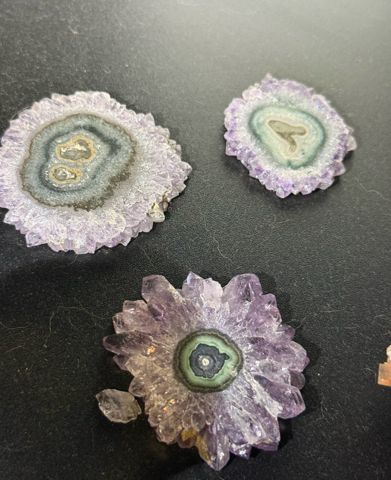
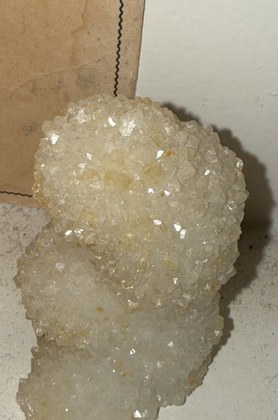
- Color varies with locality and impurities; see the photo for a typical example
- Shape & form
- Trigonal crystal system; the shape of crystals follows this symmetry
- Typical size
- Size varies widely by locality; specimens are commonly palm-sized or smaller
- Luster
- Luster varies with polish and locality
- Notable look
- Hardness about 3 on the Mohs scale
📜 Key facts
| Age | They grow over thousands of years and are still growing in living caves |
|---|---|
| Origin & sources | Limestone caves worldwide. Specimens on the market come from mines and old collections. Collecting in caves is illegal in many places, and cave formations are protected in US national parks and on federal land. |
| Composition | Calcite (CaCO₃) in concentric layers around a hollow 'soda straw' tube |
How it forms
Rainwater absorbs CO₂, dissolves limestone, then drips from cave ceilings. Each drop loses CO₂ and leaves a ring of calcite. The rings grow into a hollow soda straw, then a cone-shaped stalactite.
Mineral data: see Calcite.
Care & Handling
- 🪶 Soft, Scratches Easily Mohs 3: softer than a steel knife, so it scratches easily. Store it apart from harder stones.
🌍 Where it's found
- Type locality
- Notable source / deposit
- Country of origin
Marker positions are approximate (region or locality level). Type localities from Wikidata; notable sources curated by Crystopedia.
✨ Stalactites


✨ Metaphysical & Folklore
These are traditional and folk beliefs from crystal lore. They are not scientific or medical claims – crystals are not a substitute for professional care.
Cave calcite stalactites are linked in lore to patience, steady growth and connection to the earth.
💞 Pairs well with (traditional pairings)
 Petrified WoodBoth carry the theme of patience, so together they're thought to reinforce it.
 UnakiteA natural partner for patience; Unakite also adds emotional balance.
 Black TourmalinePaired in tradition for grounding, with Black Tourmaline bringing protection as well.
 HematiteBoth carry the theme of grounding, so together they're thought to reinforce it.
 Clear QuartzClear quartz is the traditional amplifier, said to boost calcite stalactite's patience.
Learn more
Mineral variety
3–4
Trigonal
Yellow
RootCrown
Soft, Scratches Easily
GroundingTransformationCalm
Healing crystal