
Chalcedony Stalactite
✦ Stone of Flowing Calm ✦
Crystal lore: 🌊 Calm💬 Communication🔮 Intuition
SiO₂
microcrystalline quartzSiORarity◆◆◆◆◆Common ?
Microcrystalline varieties of silica, may contain moganite as well.
Stalactite form of Chalcedony.

👁️ What It Looks Like
- Color
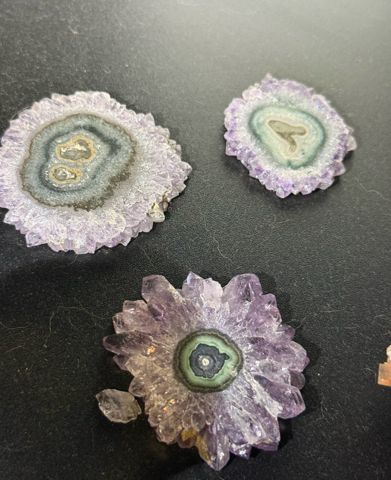
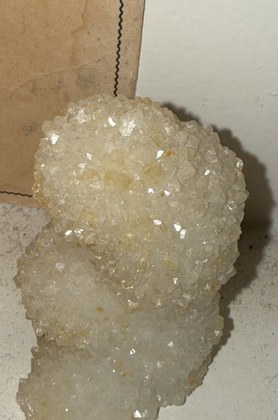
- Color varies with locality and impurities; see the photo for a typical example
- Shape & form
- Trigonal crystal system; the shape of crystals follows this symmetry
- Typical size
- Size varies widely by locality; specimens are commonly palm-sized or smaller
- Luster
- Luster varies with polish and locality
- Notable look
- Hardness about 7 on the Mohs scale
📜 Key facts
| Age | Varies by deposit |
|---|---|
| Origin & sources | Brazil, Uruguay, India (Deccan Traps) and Indonesia, and also in agate-bearing volcanic rocks worldwide. |
| Composition | Chalcedony (microcrystalline quartz), often coated in drusy quartz |
How it forms
Silica-rich water dripped inside volcanic gas cavities and deposited chalcedony around tiny tubes, much as cave stalactites grow from calcite. They are often the core of amethyst and apophyllite stalactites.
Mineral data: see Chalcedony.
🌍 Where it's found
- Type locality
- Notable source / deposit
- Country of origin
Marker positions are approximate (region or locality level). Type localities from Wikidata; notable sources curated by Crystopedia.
✨ Stalactites


✨ Metaphysical & Folklore
These are traditional and folk beliefs from crystal lore. They are not scientific or medical claims – crystals are not a substitute for professional care.
Chalcedony and quartz stalactites are linked in lore to calm, communication and gentle balance.
💞 Pairs well with (traditional pairings)
 AmazoniteBoth carry the theme of communication, so together they're thought to reinforce it.
 AquamarineA natural partner for calm; Aquamarine also adds courage.
 ChrysocollaPaired in tradition for communication, with Chrysocolla bringing calm as well.
 LarimarBoth carry the theme of calm, so together they're thought to reinforce it.
 Smoky QuartzA grounding root stone to balance chalcedony stalactite's high, spiritual energy.