
Amethyst Stalactite
✦ The Amethyst Flower ✦
Crystal lore: 🌊 Calm🔮 Intuition🌙 Sleep
Also known as: Amethyst flower, Amethyst star slice
≈ SiO₂
amethyst quartz over a chalcedony coreSiORarity◆◆◆◆◆Common ?
Mineral of quartz variety.
Stalactite form of Amethyst.
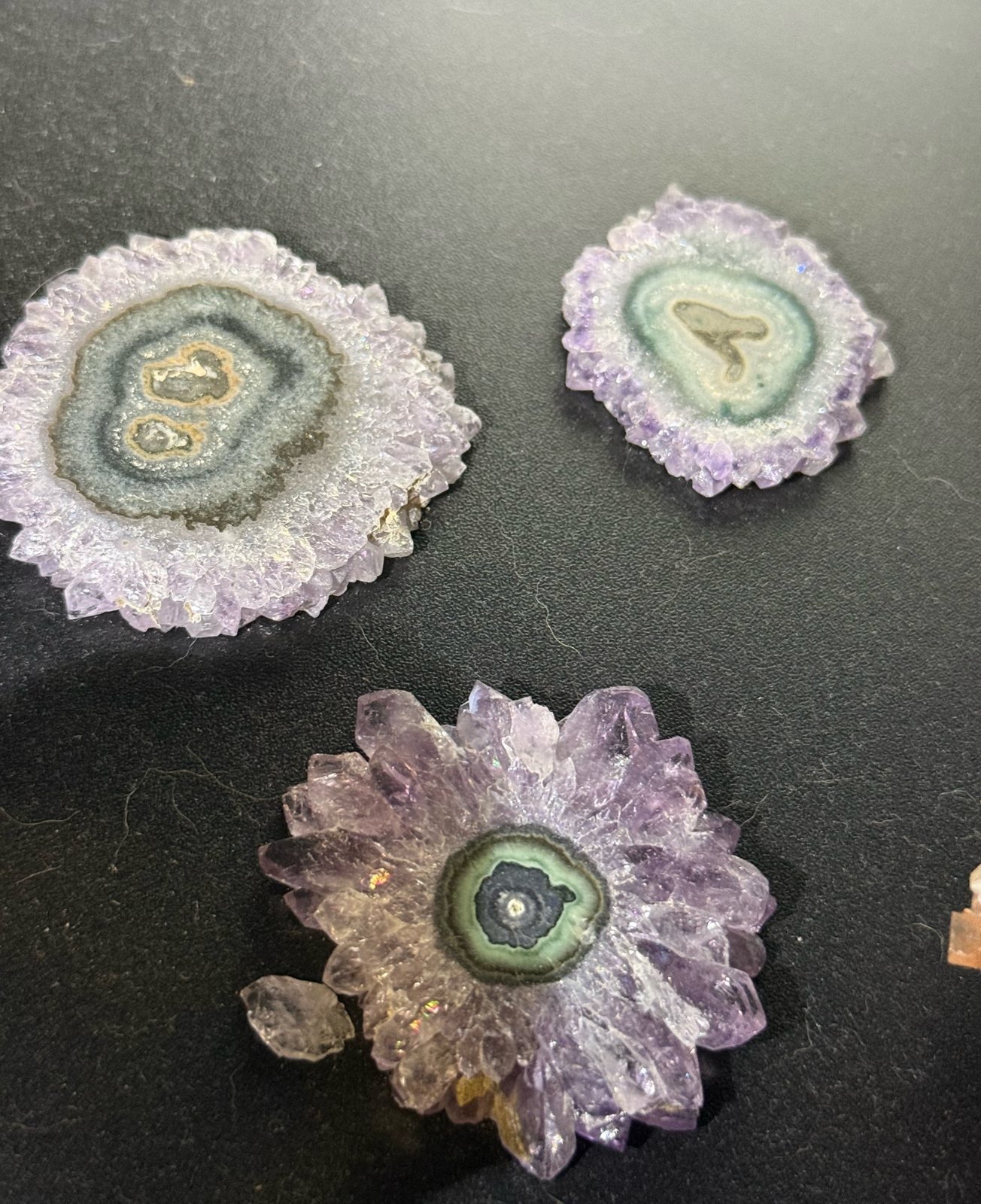
👁️ What It Looks Like
- Color
- Pale lilac to deep royal purple, often deepest at the crystal tips
- Shape & form
- Six-sided prisms with pyramid tips, clustered in geodes and on matrix
- Typical size
- Crystals from tiny points to over 30 cm; clusters can be huge
- Luster
- Glassy; transparent to translucent
- Notable look
- Color can fade in strong sunlight
📜 Key facts
| Age | Lower Cretaceous basalts, about 135–130 million years old |
|---|---|
| Origin & sources | Artigas, Uruguay, and Rio Grande do Sul, Brazil, from inside large amethyst geodes in basalt. |
| Composition | Amethyst (quartz) grown around a core of chalcedony or agate, usually sold as polished slices |
How it forms
Inside gas cavities in basalt, silica-rich water dripped and built finger-like chalcedony columns, which later got coated in amethyst crystals. Cut across, each slice shows a chalcedony 'eye' surrounded by a ring of purple crystals that looks like a flower or star.
Mineral data: see Amethyst.
🌍 Where it's found
- Type locality
- Notable source / deposit
- Country of origin
Marker positions are approximate (region or locality level). Type localities from Wikidata; notable sources curated by Crystopedia.
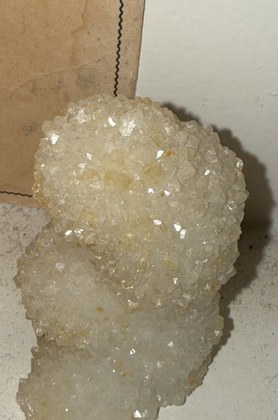
✨ Stalactites


✨ Metaphysical & Folklore
These are traditional and folk beliefs from crystal lore. They are not scientific or medical claims – crystals are not a substitute for professional care.
Sliced amethyst stalactites show a flower or star, and crystal lore links them to calm, intuition and spiritual growth.
💞 Pairs well with (traditional pairings)
 MoonstoneA natural partner for intuition; Moonstone also adds new beginnings.
 LabradoritePaired in tradition for intuition, with Labradorite bringing transformation as well.
 AmethystShares the Third Eye & Crown chakra; adds meditation to amethyst stalactite's calm.
 HowliteA natural partner for calm; Howlite also adds patience.
 Smoky QuartzA grounding root stone to balance amethyst stalactite's high, spiritual energy.