
Rhodochrosite Stalactite
✦ The Inca Rose Flower ✦
Crystal lore: 💗 Love🌿 Healing🎨 Creativity
Also known as: Inca rose
MnCO₃
rhodochrositeMnCORarity◆◆◆◆◆Common ?
Manganese carbonate mineral.
Stalactite form of Rhodochrosite.

👁️ What It Looks Like
- Color
- Color varies with locality and impurities; see the photo for a typical example
- Shape & form
- Trigonal crystal system; the shape of crystals follows this symmetry
- Typical size
- Size varies widely by locality; specimens are commonly palm-sized or smaller
- Luster
- Luster varies with polish and locality
📜 Key facts
| Age | The deposit formed about 6 million years ago (Miocene); the stalactites grew in the mine workings over centuries |
|---|---|
| Origin & sources | Capillitas mine, Catamarca, Argentina. It is famous for 'Inca rose' stalactites first worked in the 13th century. |
| Composition | Rhodochrosite (MnCO₃) in concentric pink and white bands |
How it forms
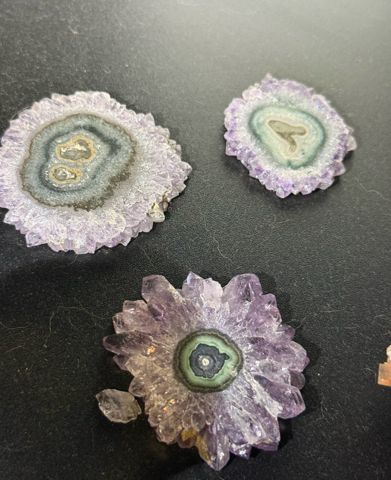
Manganese-rich water dripped in open spaces in the ore veins and old mine workings, building stalactites layer by layer. Cut across, they show bullseye rings of pink and white.
Mineral data: see Rhodochrosite.
🌍 Where it's found
- Type locality
- Notable source / deposit
- Country of origin
Marker positions are approximate (region or locality level). Type localities from Wikidata; notable sources curated by Crystopedia.
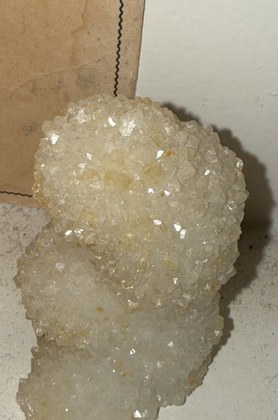
✨ Stalactites


✨ Metaphysical & Folklore
These are traditional and folk beliefs from crystal lore. They are not scientific or medical claims – crystals are not a substitute for professional care.
Argentina's rose-banded 'Inca rose' stalactites are linked in lore to compassion, self-love and emotional healing.
💞 Pairs well with (traditional pairings)
 RhodochrositeBoth carry the theme of self-love, so together they're thought to reinforce it.
 Rose QuartzA natural partner for self-love; Rose Quartz also adds emotional healing.
 EmeraldPaired in tradition for love, with Emerald bringing renewal as well.
 PrehniteBoth carry the theme of unconditional love, so together they're thought to reinforce it.
 Clear QuartzClear quartz is the traditional amplifier, said to boost rhodochrosite stalactite's compassion.