
Desert rose
✦ Stone of Mental Clarity ✦
Crystal lore: 🎯 Focus🌊 Calm🌳 Grounding
Also known as: Selenite rose, Gypsum rose, Sand rose
CaSO₄·2H₂O / BaSO₄
gypsum or barite rosettes with sandCaSOHBaRarity◆◆◆◆◆Common ?
Rose-like formations of crystal clusters of gypsum or baryte which include abundant sand grains.
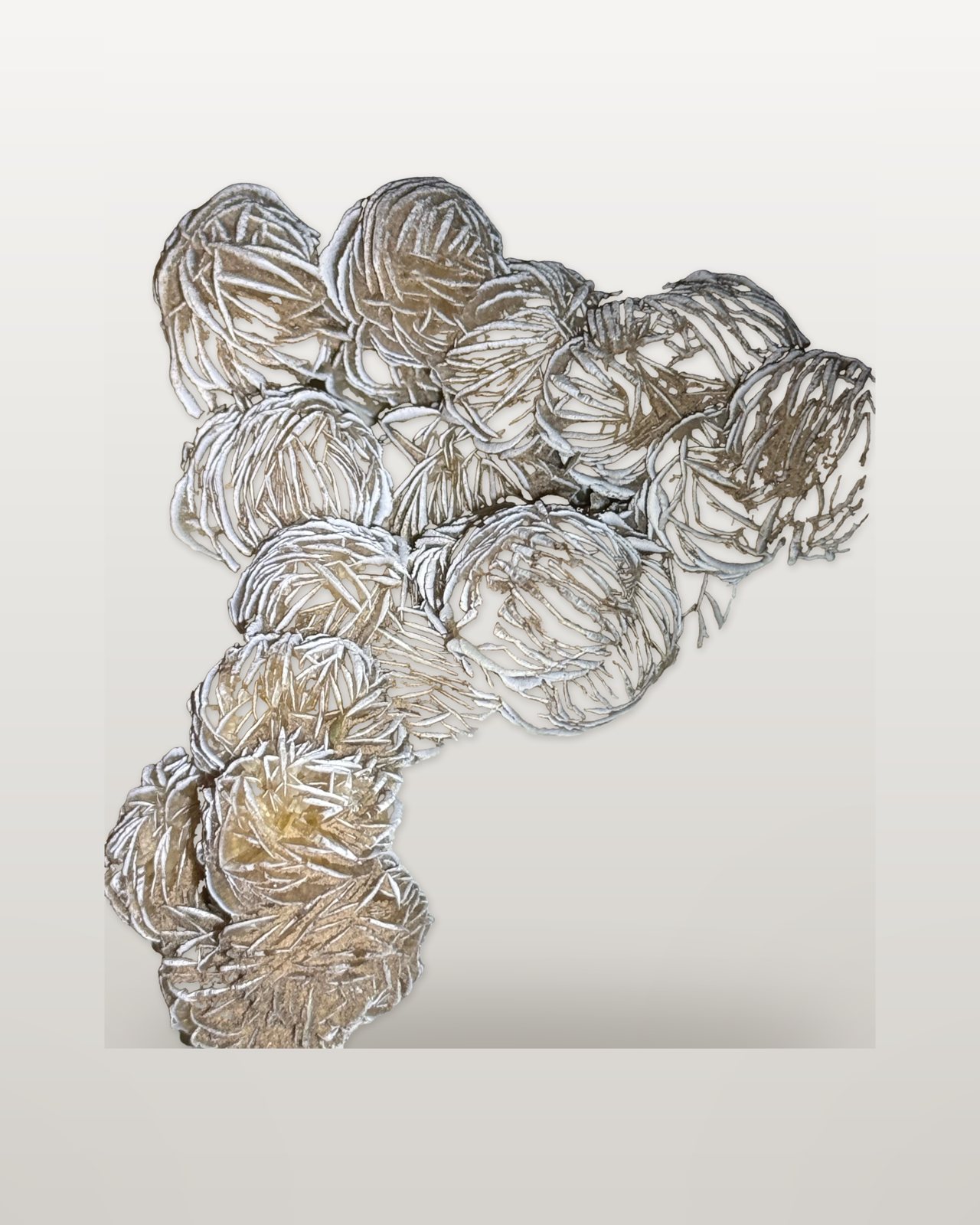
👁️ What It Looks Like
- Color
- Color varies with locality and impurities; see the photo for a typical example
- Shape & form
- Shape varies; commonly seen as polished or tumbled pieces
- Typical size
- Size varies widely by locality; specimens are commonly palm-sized or smaller
- Luster
- Luster varies with polish and locality
Properties
| Chemical formula | CaSO₄·2H₂O / BaSO₄ |
|---|---|
| Elements | Ca, S, O, H, Ba |
| Crystal system | — |
| Mohs hardness | — |
| Density | — |
| Streak | — |
| Color | — |
“—” means no reliable value in Wikidata yet. Check Mindat for full data.
Care & Handling
- 💧 Don't Get Wet Gypsum or barite roses with sand grains; water can loosen and dissolve the blades.
🌍 Where it's found
- Type locality
- Notable source / deposit
- Country of origin
Marker positions are approximate (region or locality level). Type localities from Wikidata; notable sources curated by Crystopedia.
🔗 See also
- Barite Rose: the barite form: Oklahoma's state rock
- Selenite: the gypsum mineral that makes Sahara desert roses
💡 Good to know
There are two kinds of 'desert rose'. Gypsum (selenite) roses form in sandy deserts such as the Sahara (Tunisia, Algeria and Morocco) and Chihuahua, Mexico. Barite roses come from central Oklahoma, where the 'rose rock' is the state rock. Gypsum roses are softer (Mohs 2) and slightly water-soluble. Barite roses are heavier and harder (Mohs 3–3.5).
✨ Desert rose forms


✨ Metaphysical & Folklore
These are traditional and folk beliefs from crystal lore. They are not scientific or medical claims – crystals are not a substitute for professional care.
These rosette-shaped gypsum or barite clusters are associated with clarity and letting go.
💞 Pairs well with (traditional pairings)
 ApophyllitePaired in tradition for clarity, with Apophyllite bringing meditation as well.
 Black TourmalineBoth carry the theme of grounding, so together they're thought to reinforce it.
 Clear QuartzA natural partner for focus and clarity; Clear Quartz also adds programming intentions.
 HematitePaired in tradition for grounding, with Hematite bringing focus as well.
Learn more
- Desert rose on Mindat.org
- Wikipedia article
- Wikidata item Q509713 (source of this page's data – you can correct it there)