
Blue Aragonite
✦ Stone of Calm Expression ✦
Crystal lore: 🌊 Calm💬 Communication💗 Love
CaCO₃
aragonite, Cu-bearingCaCORarity◆◆◆◆◆Common ?
Carbonate mineral.
Variety of Aragonite.
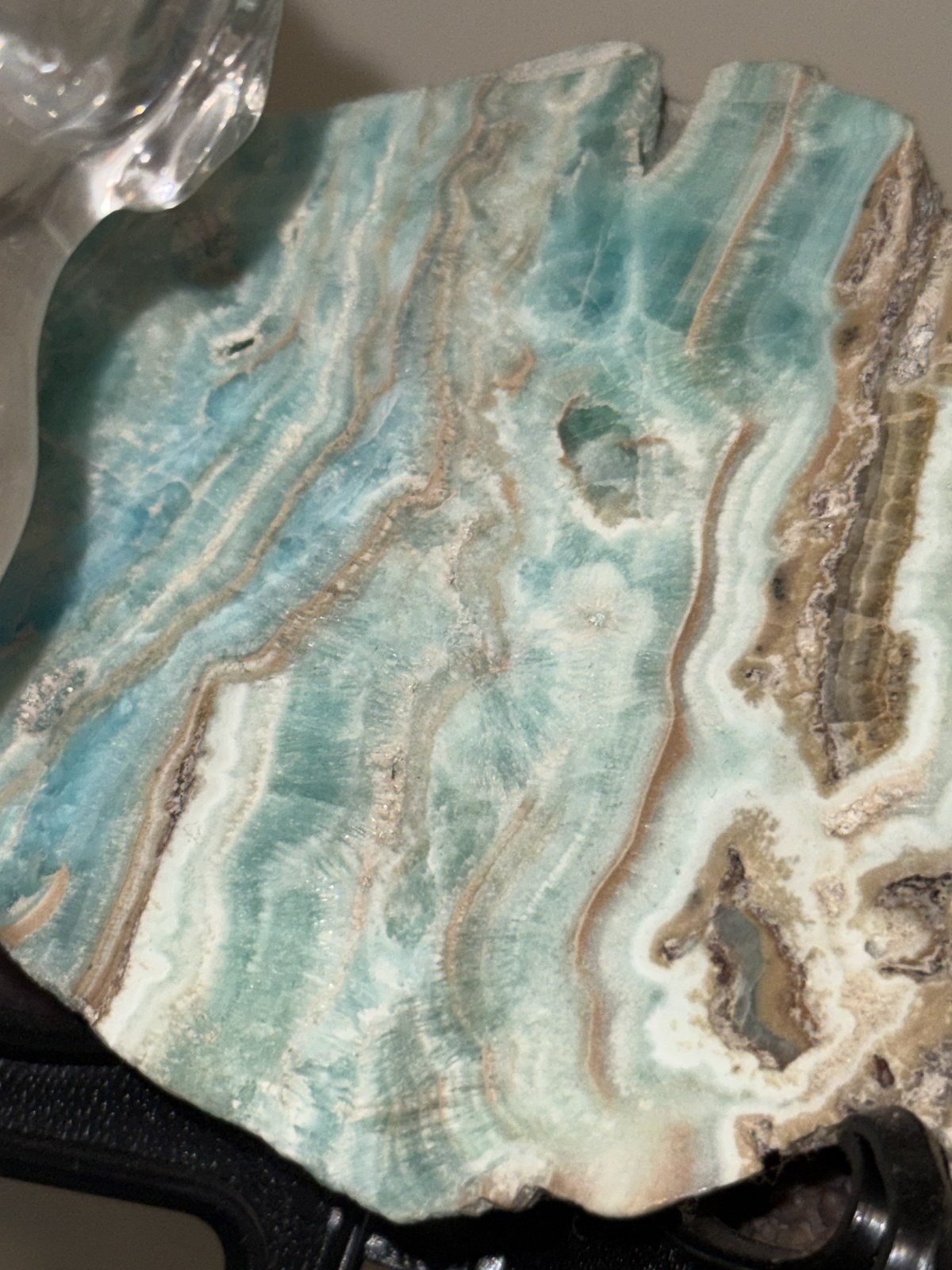
👁️ What It Looks Like
- Color
- Pale sky blue to teal, often with white
- Shape & form
- Columnar or needle-like crystals in sprays and clusters, sometimes pseudo-hexagonal twins
- Typical size
- Crystals millimeters to several centimeters; clusters hand-sized
- Luster
- Glassy to resinous; translucent
- Notable look
- The blue comes from trace copper; found in Mexico and Namibia
📜 Key facts
| Age | Varies by deposit; many deposits are geologically young |
|---|---|
| Origin & sources | Lijiang, Yunnan, China, and Greece. |
| Composition | Aragonite coloured blue by copper (often with traces of other copper minerals). Aragonite is CaCO₃, like calcite, but with a different (orthorhombic) structure; Mohs 3.5–4. |
How it forms
Aragonite crystallizes from carbonate-rich water, often in warm or magnesium-rich conditions such as springs, caves and seawater (shells and pearls are aragonite). Over time it can slowly turn into calcite. It is soft and acid-sensitive, so keep it dry.
Mineral data: see Aragonite.
Care & Handling
- 🪶 Soft, Scratches Easily Mohs 3.5 – 4: softer than a steel knife, so it scratches easily. Store it apart from harder stones.
🌍 Where it's found
- Type locality
- Notable source / deposit
- Country of origin
Marker positions are approximate (region or locality level). Type localities from Wikidata; notable sources curated by Crystopedia.
📷 Gallery
✨ Aragonite family


✨ Metaphysical & Folklore
These are traditional and folk beliefs from crystal lore. They are not scientific or medical claims – crystals are not a substitute for professional care.
Soft blue aragonite is linked in lore to calm communication and emotional soothing.
💞 Pairs well with (traditional pairings)
 AmazonitePaired in tradition for communication, with Amazonite bringing soothing as well.
 ChrysocollaBoth carry the theme of communication, so together they're thought to reinforce it.
 LarimarA natural partner for calm; Larimar also adds feminine energy.
 Blue Lace AgatePaired in tradition for calm speech, with Blue Lace Agate bringing soothing anxiety as well.
 Clear QuartzClear quartz is the traditional amplifier, said to boost blue aragonite's communication.