
Yooperlite
%20(Lake%20Superior%20shoreline%2C%20Upper%20Peninsula%20of%20Michigan%2C%20USA)%201.jpg?width=480)
_(Lake_Superior_shoreline%2C_Upper_Peninsula_of_Michigan%2C_USA)_1.jpg)
📜 Key facts
| Age | Mesoproterozoic syenite (about 1.1 billion years old), carried to Michigan by glaciers |
|---|---|
| Origin & sources | Lake Superior beaches of Michigan's Upper Peninsula, from Whitefish Point to Grand Marais. The source is thought to be the Coldwell Alkaline Complex in Ontario. |
| Composition | Syenite (mostly alkali feldspar) containing fluorescent sodalite |
How it forms
Sodalite-bearing syenite formed in a magma body north of Lake Superior. Ice-age glaciers broke it up and carried the pebbles south, where waves rounded them. Rock hound Erik Rintamaki noticed them glowing under a UV flashlight in 2017, and researchers confirmed the glowing mineral is sodalite.
✺ Glows under UV
| Longwave UV (~365 nm) | Strong orange-yellow (the sodalite veins and spots) |
|---|---|
| Shortwave UV (~254 nm) | Weak yellowish |
| Phosphorescence (afterglow) | None visible |
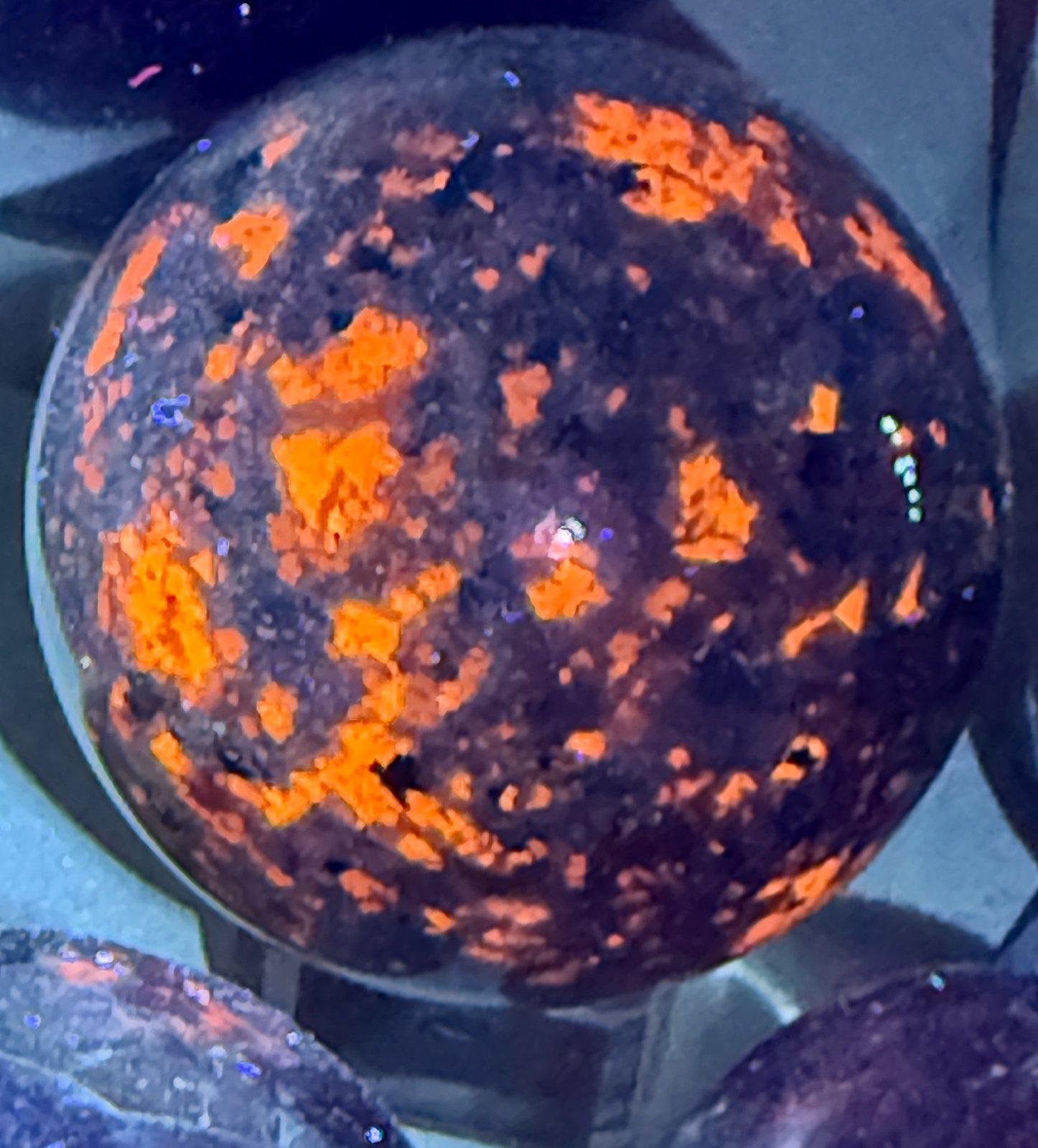
In daylight it looks like a plain grey pebble. Under a longwave flashlight it lights up with glowing orange-yellow spots and veins. Hunters search the beaches at night.
Reactions vary by locality and specimen; many specimens of a fluorescent species do not glow. Shortwave UV can burn skin and damage eyes. Wear UV-blocking glasses, and never look into any UV lamp. Sources: Yooperlites: 'A New Find of Fluorescent Sodalite' · fluomin.org: Yooperlite · Wikipedia: Syenite. More UV-reactive stones →
🌍 Where it's found
- Type locality
- Notable source / deposit
- Country of origin
Marker positions are approximate (region or locality level). Type localities from Wikidata; notable sources curated by Crystopedia.