
Volcano Agate
✦ Stone of Hidden Glow ✦
Crystal lore: 🌳 Grounding🔥 Confidence🦋 Transformation
SiO₂
agate / chalcedony (microcrystalline quartz)SiORarity◆◆◆◆◆Common ?
Chalcedony variety.
Variety of Agate.
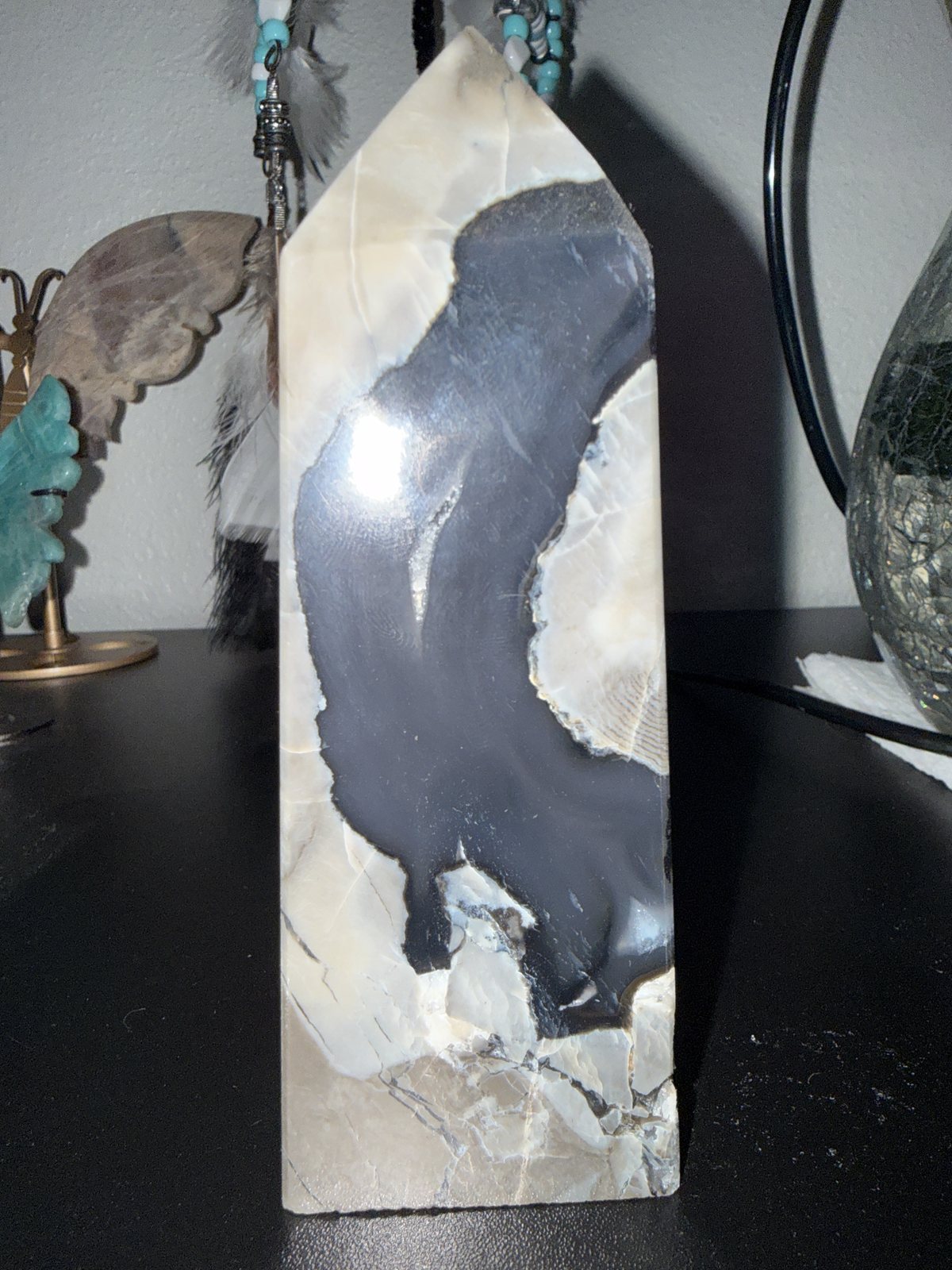
👁️ What It Looks Like
- Color
- Gray, tan, cream or rusty red-brown; often a gray center in a pale rind
- Shape & form
- Polished points, towers, eggs and slices cut from nodules or vug fillings
- Typical size
- Hand-sized carvings and polished pieces are typical
- Luster
- Waxy to glassy; translucent to opaque
- Notable look
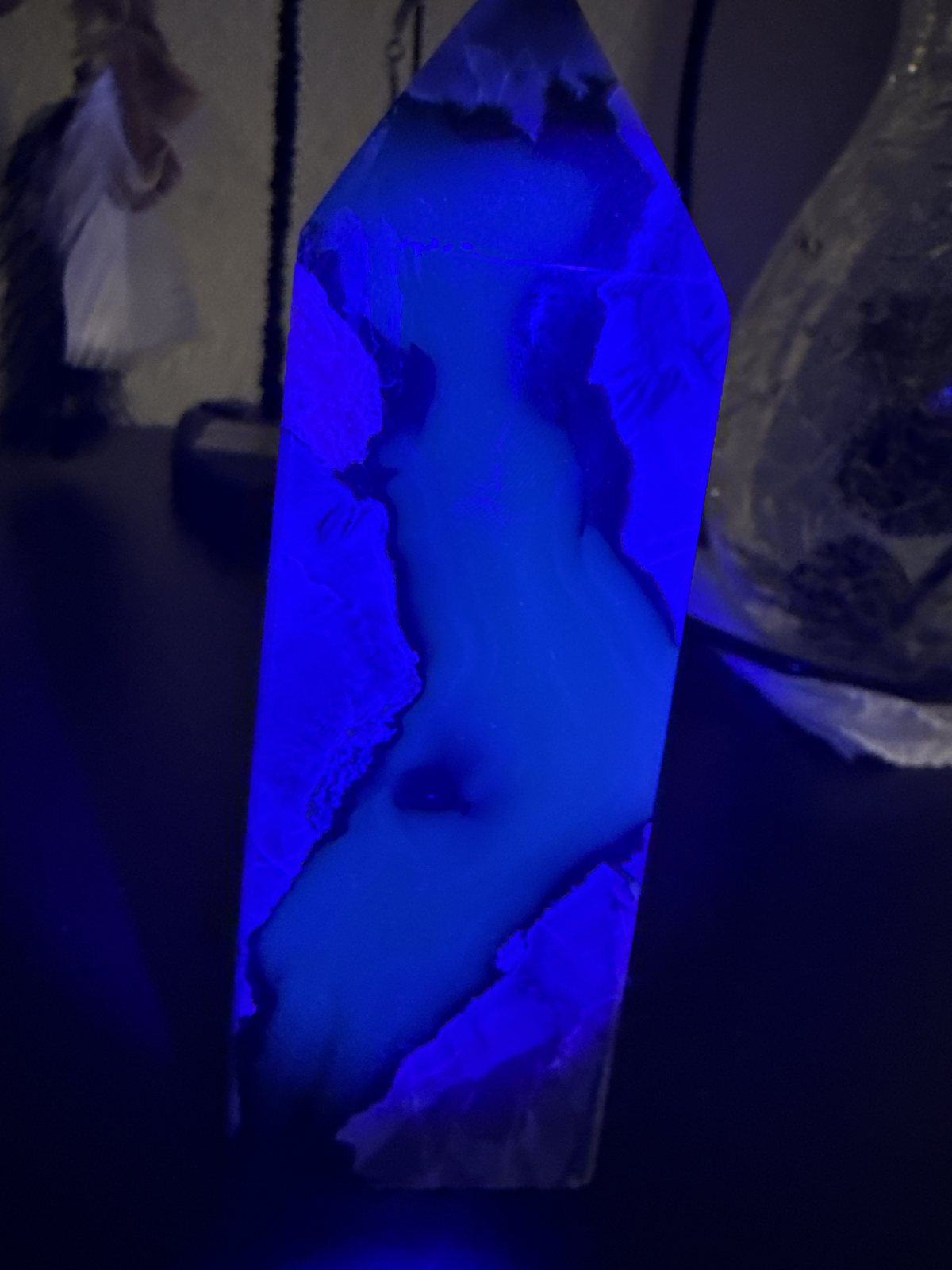
- Often glows green under UV light (trace uranyl)
📜 Key facts
| Age | Varies by deposit (hosted in volcanic rock) |
|---|---|
| Origin & sources | A trade name, not a place: sellers report it from Madagascar and China, among others. |
| Composition | Agate / chalcedony (microcrystalline quartz, SiO₂); trace uranyl often makes it glow green under UV. |
How it forms
Silica-rich water filled gas bubbles and cavities in volcanic rock and slowly deposited microcrystalline quartz. The name points to the volcanic host rock, not to a separate mineral.
Mineral data: see Agate.
✺ Glows under UV
| Longwave UV (~365 nm) | Usually weaker green under longwave |
|---|---|
| Shortwave UV (~254 nm) | Agate and chalcedony from volcanic rocks often glow green (strongest under shortwave) |
☀ In daylight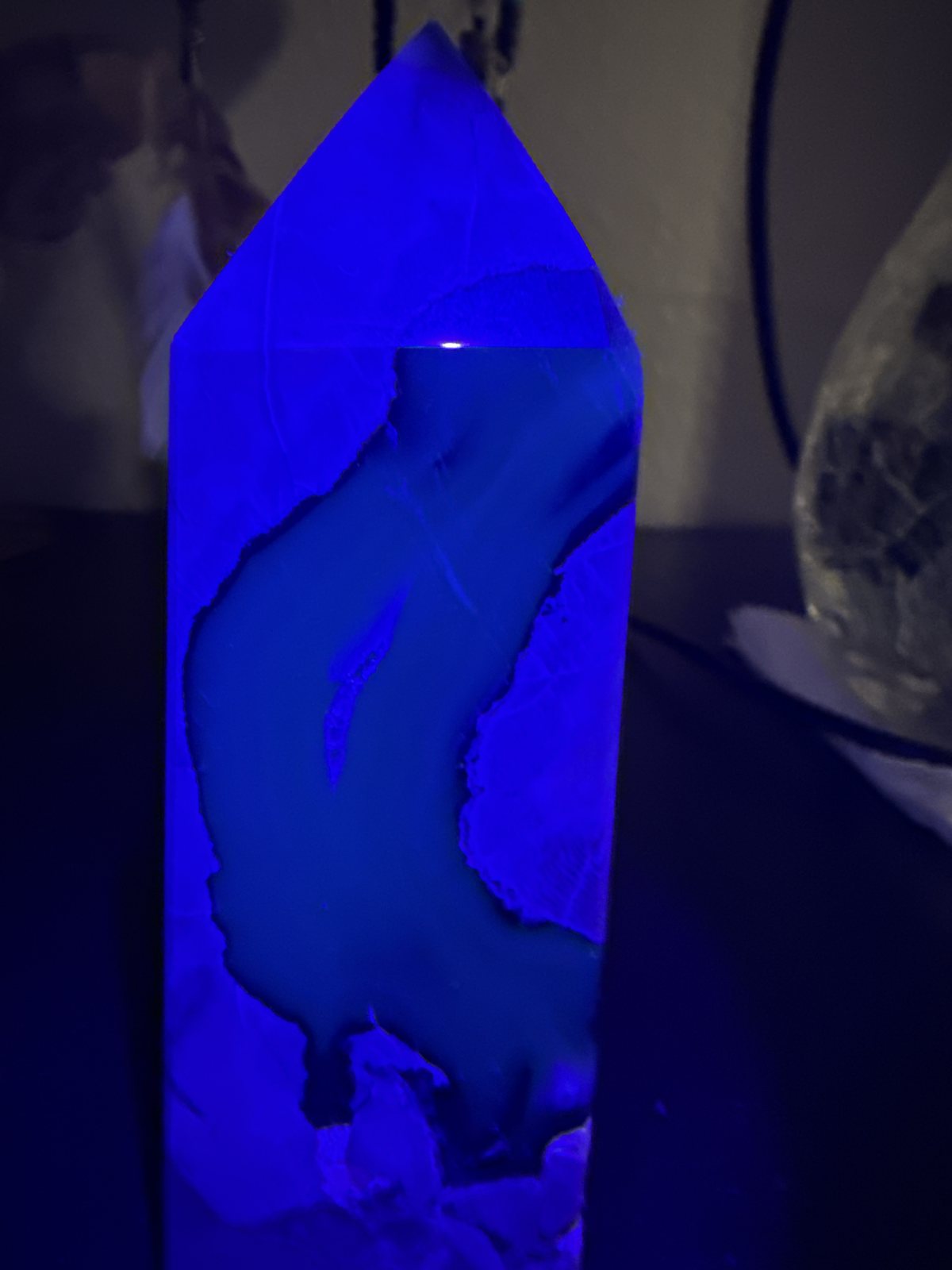 ✺ Under UV
'Volcano agate' is a trade name for agate or chalcedony, often from volcanic rock. The green glow of this material is caused by trace uranyl (uranium) ions, not by a separate mineral. How strongly a piece reacts varies a lot from specimen to specimen.
Reactions vary by locality and specimen; many specimens of a fluorescent species do not glow. Shortwave UV can burn skin and damage eyes. Wear UV-blocking glasses, and never look into any UV lamp. Sources: New Mexico Tech: fluorescent agate and chalcedony (uranyl) · Stack of Stones: Gem or Scam library, Volcano agate. More UV-reactive stones →
📷 Gallery
✨ Metaphysical & Folklore
These are traditional and folk beliefs from crystal lore. They are not scientific or medical claims – crystals are not a substitute for professional care.
Volcano agate is linked in crystal lore to inner fire, resilience and steady transformation.
💞 Pairs well with (traditional pairings)
 HematiteA natural partner for grounding; Hematite also adds focus.
 Red JasperPaired in tradition for grounding, with Red Jasper bringing stamina as well.
 Snowflake ObsidianBoth carry the theme of grounding, so together they're thought to reinforce it.
 Black TourmalineA natural partner for grounding; Black Tourmaline also adds protection.
 Clear QuartzLifts and clarifies volcano agate's grounding energy; clear quartz is said to amplify any stone.