
Pyrite Sun
✦ Stone of Abundance ✦
Crystal lore: 💰 Abundance🔥 Confidence🍀 Luck
Also known as: Pyrite dollar, Miner's dollar, Pyrite disc
FeS₂
pyrite/marcasiteFeSRarity◆◆◆◆◆Common ?
Iron(II) disulfide mineral.
Variety of Pyrite.
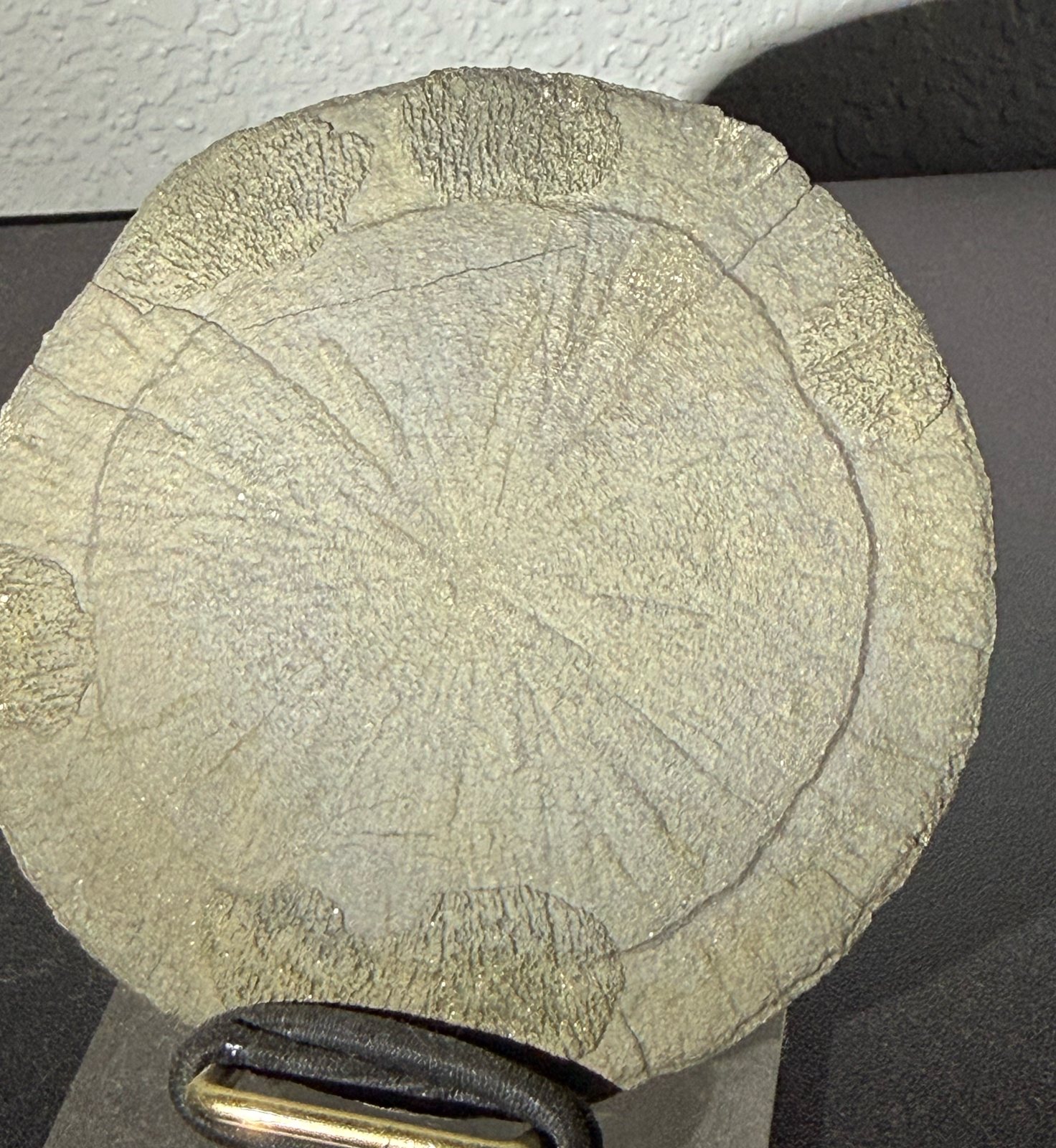
👁️ What It Looks Like
- Color
- Gold, copper
- Shape & form
- Cubic crystal system; the shape of crystals follows this symmetry
- Typical size
- Size varies widely by locality; specimens are commonly palm-sized or smaller
- Luster
- Luster varies with polish and locality
- Notable look
- Hardness about 6 on the Mohs scale
📜 Key facts
| Age | Pennsylvanian, about 300 million years old |
|---|---|
| Origin & sources | Coal mines near Sparta and Pinckneyville, Randolph and Perry Counties, Illinois, USA. They are often sold as 'pyrite dollars' or 'miner's dollars'. |
| Composition | Radiating crystals of pyrite and/or marcasite (FeS₂) that formed in thin layers of shale |
How it forms
The 'suns' grew flat between thin layers of shale above coal seams, where iron sulfide crystallized outward from a centre into radiating disks. Being iron sulfides, they can decay if kept damp.
Mineral data: see Pyrite.
Care & Handling
- 💧 Don't Get Wet Iron sulfide rusts and can decay ('pyrite disease') in water and humidity.
🌍 Where it's found
- Type locality
- Notable source / deposit
- Country of origin
Marker positions are approximate (region or locality level). Type localities from Wikidata; notable sources curated by Crystopedia.
✨ Metaphysical & Folklore
These are traditional and folk beliefs from crystal lore. They are not scientific or medical claims – crystals are not a substitute for professional care.
A flat golden sunburst of pyrite, linked in crystal lore to confidence, abundance and personal power.
💞 Pairs well with (traditional pairings)
 PyriteA natural partner for abundance; Pyrite also adds protection.
 Tiger's EyePaired in tradition for confidence, with Tiger's Eye bringing focus as well.
 CitrineBoth carry the theme of confidence, so together they're thought to reinforce it.
 PeridotA natural partner for abundance; Peridot also adds renewal.
 Clear QuartzClear quartz is the traditional amplifier, said to boost pyrite sun's confidence.