
Fluorite
✦ The Genius Stone ✦
💧 Don't Get Wet☀️ Fades in Sunlight☠️ Toxic — Handle With Care🪶 Soft, Scratches Easily
Crystal lore: 🎯 Focus✨ Cleansing🌊 Calm
CaF₂
CaFRarity◆◆◆◆◆Common ?
Mineral, calcium fluoride.

👁️ What It Looks Like
- Color
- Purple, green, blue, yellow, pink or colorless; often zoned
- Shape & form
- Cubes and octahedra, or massive
- Typical size
- Crystals millimeters to over 30 cm
- Luster
- Glassy; transparent to translucent
- Notable look
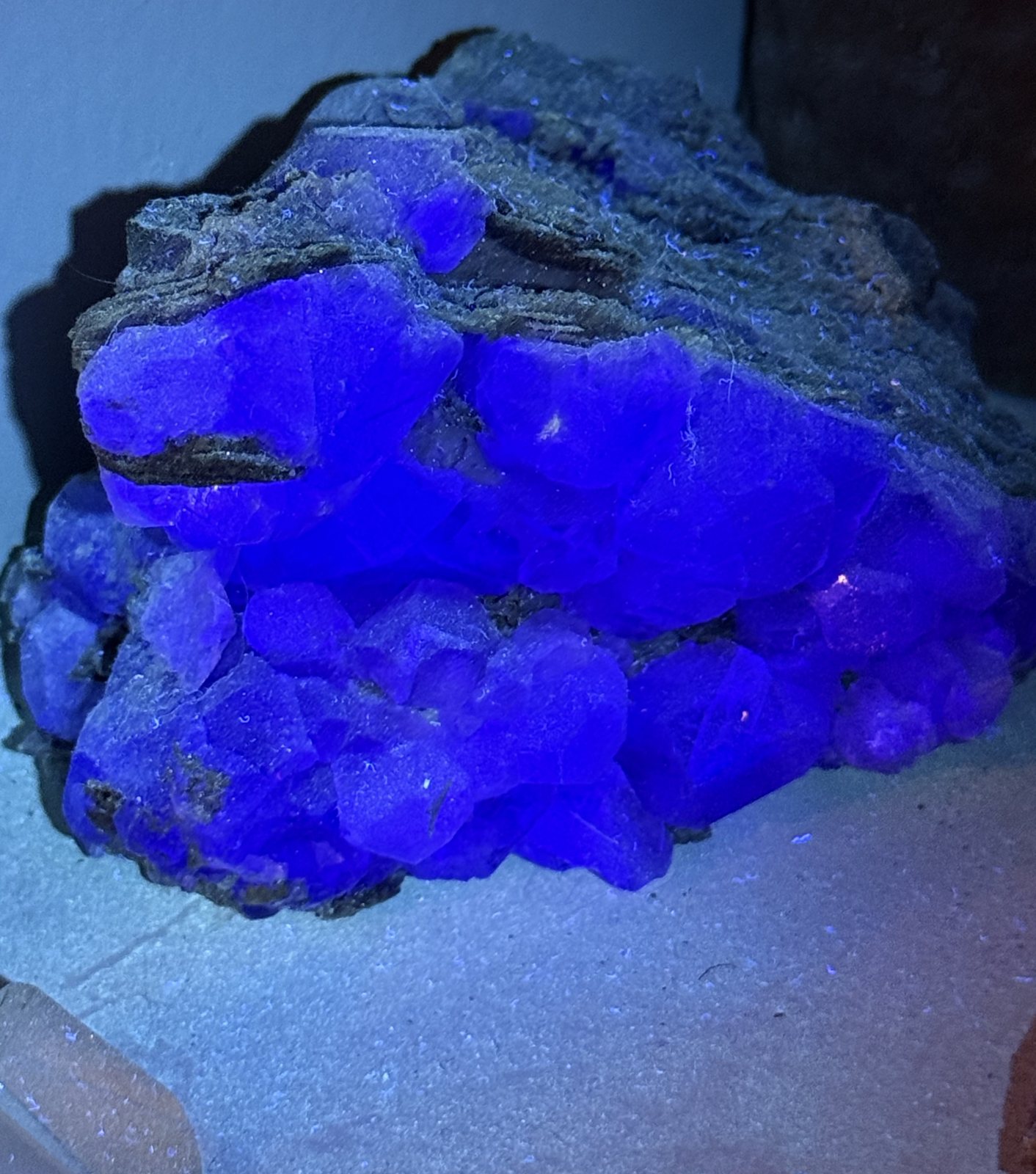
- Often glows blue or violet under UV
Properties
A steel knife scratches it, it won't scratch glass.
| Chemical formula | CaF₂ |
|---|---|
| Elements | Ca, F |
| Crystal system | Cubic |
| Mohs hardness | 4 |
| Density | 3.09 g/cm³ |
| Streak | white |
| Color | blue, green, gold, brown, pink, purple, colorless, lilac, champagne |
| IMA symbol | Flr |
| Nickel–Strunz class | 3.AB.25 |
“—” means no reliable value in Wikidata yet. Check Mindat for full data.
Care & Handling
- 💧 Don't Get Wet Perfect cleavage; temperature changes and soaking can cause cracks.
- ☀️ Fades in Sunlight Purple and green fluorite can fade in strong light.
- ☠️ Toxic — Handle With Care Calcium fluoride. Solid pieces are safe to handle and not very soluble. It is not recommended for elixirs, though, and its dust shouldn't be swallowed or inhaled.
- 🪶 Soft, Scratches Easily Mohs 4: softer than a steel knife, so it scratches easily. Store it apart from harder stones.
This stone is in the Handle With Care collection; see the safety section below.
⚠ Handle With Care Low caution
Why: Calcium fluoride. Solid pieces are safe to handle and not very soluble. It is not recommended for elixirs, though, and its dust shouldn't be swallowed or inhaled.
Safe handling: Handling it is fine. Avoid elixirs and dry grinding.
Sources: Wikipedia: Fluorite · ATSDR ToxFAQs: Fluorides. General safety information only, not medical advice. More on safe handling.
✺ Glows under UV
| Longwave UV (~365 nm) | Blue to violet-blue (the classic glow) |
|---|---|
| Midwave UV (~310 nm) | Blue-green |
| Shortwave UV (~254 nm) | Blue-green, sometimes white, yellow or green |
| Phosphorescence (afterglow) | Some fluorites phosphoresce |
☀ In daylight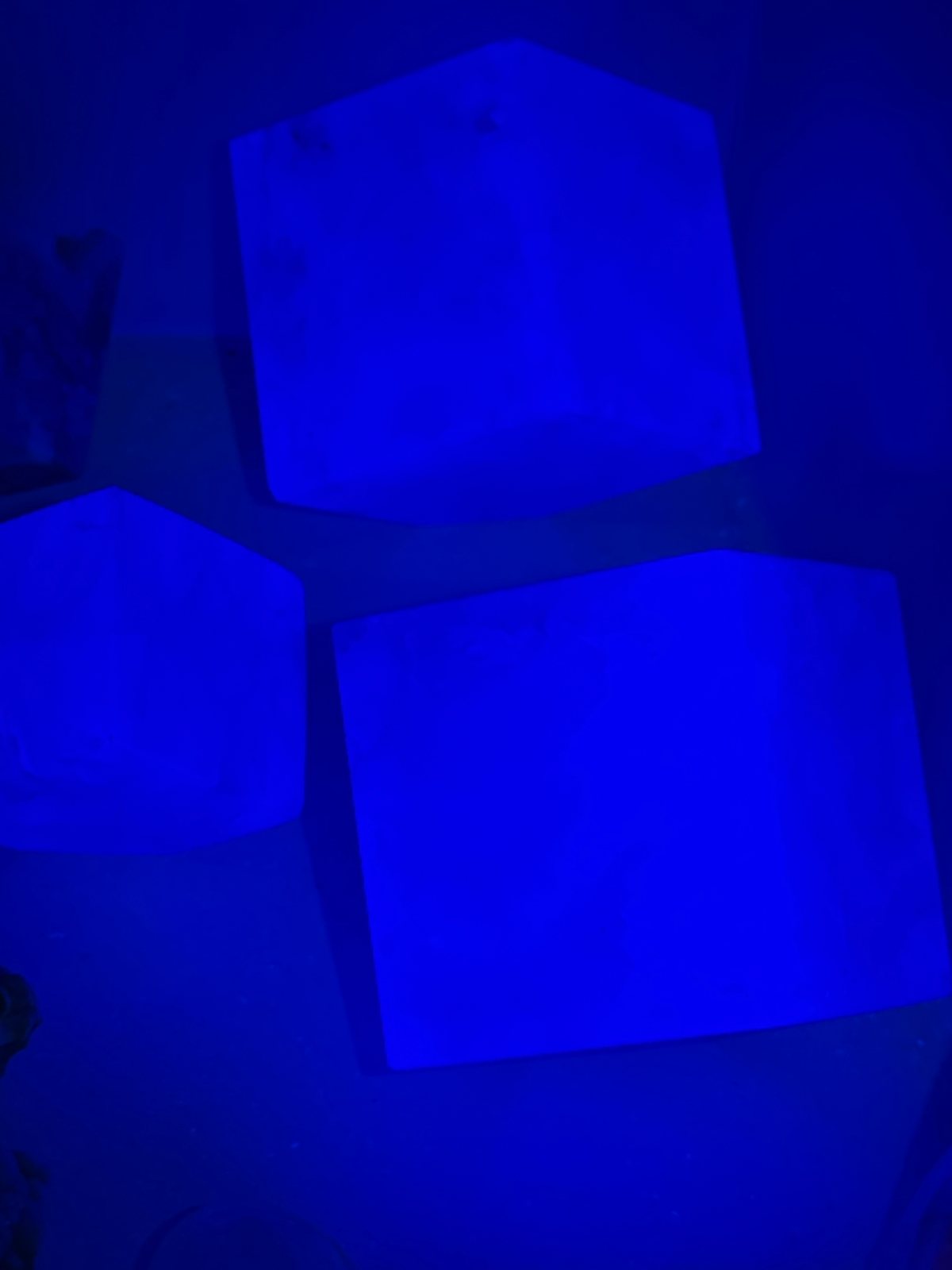 ✺ Under UV
The word 'fluorescence' comes from fluorite: George Stokes named it in 1852. The glow comes from trace impurities, so many fluorites barely react. English fluorite from Weardale is famous for its strong blue glow.
Reactions vary by locality and specimen; many specimens of a fluorescent species do not glow. Shortwave UV can burn skin and damage eyes. Wear UV-blocking glasses, and never look into any UV lamp. Sources: Wikipedia: Fluorite · Franklin Mineral Museum fluorescent mineral checklist. More UV-reactive stones →
🌍 Where it's found
Type locality (where it was first described): Jáchymov, Czech Republic
- Type locality
- Notable source / deposit
- Country of origin
Marker positions are approximate (region or locality level). Type localities from Wikidata; notable sources curated by Crystopedia.
📷 Gallery
🖐 Collector’s note
Fluorite is soft (Mohs 4) with perfect octahedral cleavage — chips easily. Colours band purple, green, blue and yellow. Glass 'fluorite' is harder and lacks cleavage. Keep it out of ultrasonic cleaners and hard stone piles.
Varieties & related stones
✨ Metaphysical & Folklore
💧 Elixir safety: This stone is not safe for water or drinking elixirs. If you use elixirs at all, use the indirect method (stone in a sealed glass inside the water) or choose a different stone.
These are traditional and folk beliefs from crystal lore. They are not scientific or medical claims – crystals are not a substitute for professional care.
Nicknamed the 'genius stone', fluorite is associated with focus, order and clear thinking.
💞 Pairs well with (traditional pairings)


Learn more
- Fluorite on Mindat.org
- Wikipedia article
- Wikidata item Q102151 (source of this page's data – you can correct it there)