
Blue Moonstone
✦ Stone of Moonlit Calm Speech ✦
Crystal lore: 🌊 Calm🔮 Intuition💬 Communication
KAlSi₃O₈ + NaAlSi₃O₈
adularia with albite lamellaeKAlSiONaRarity◆◆◆◆◆Common ?
Orthoclase variety moonstone also known as white labradorite from feldspar with schiller.
Variety of Moonstone.


👁️ What It Looks Like
- Color
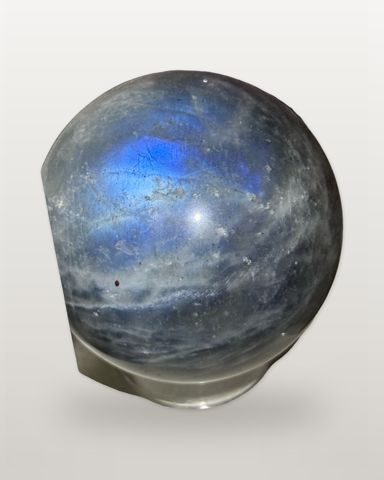
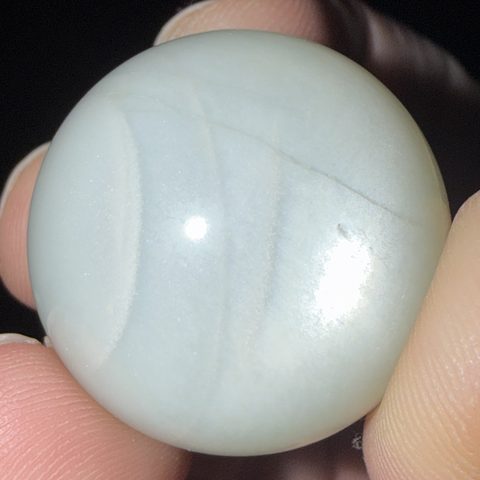
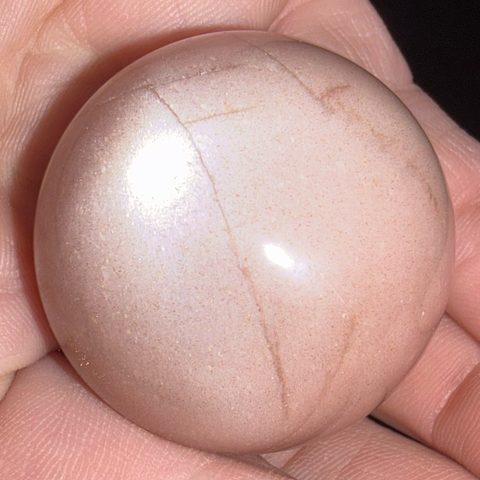
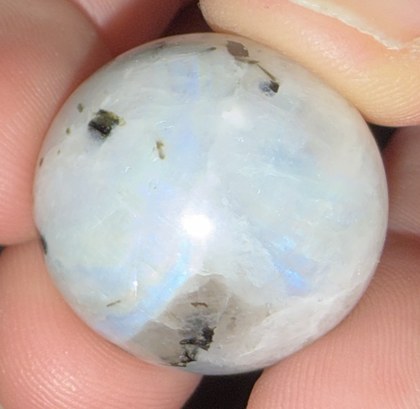
- Colorless, white, peach, gray or blue with a floating blue-white glow
- Shape & form
- Massive feldspar; polished into cabochons
- Typical size
- Cabochons a few mm to several cm
- Luster
- Glassy to pearly; translucent
- Notable look
- The glow moves as you turn the stone
Can also be found with: 🌙Adularescence (moonstone glow)
Based on standard references · source · effect source📜 Key facts
| Age | Varies by deposit |
|---|---|
| Origin & sources | Historically Meetiyagoda, Sri Lanka, where top-quality blue material is now rare. Also India and Myanmar. |
| Composition | Adularia feldspar with especially thin, regular albite layers |
How it forms
When the feldspar layers are extremely thin, they scatter mostly blue light (like a blue sky), giving the prized blue adularescence. Many 'blue moonstones' on the market are dyed, glass imitations or labradorite.
Mineral data: see Moonstone.
🌍 Where it's found
- Type locality
- Notable source / deposit
- Country of origin
Marker positions are approximate (region or locality level). Type localities from Wikidata; notable sources curated by Crystopedia.
✨ Moonstone types




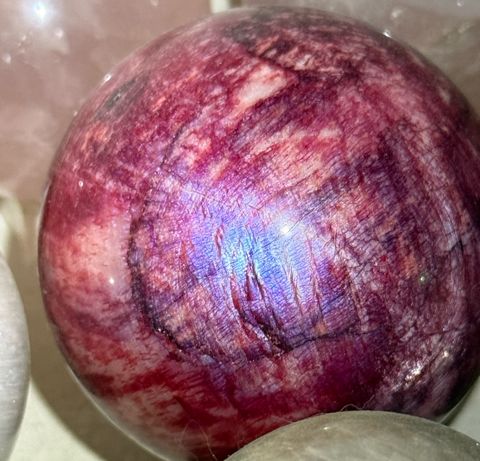
✨ Metaphysical & Folklore
These are traditional and folk beliefs from crystal lore. They are not scientific or medical claims – crystals are not a substitute for professional care.
Rare true blue moonstone, with its intense blue glow, is linked in lore to calm communication and intuition.
💞 Pairs well with (traditional pairings)
 AquamarinePaired in tradition for calm, with Aquamarine bringing courage as well.
 ChrysocollaBoth carry the theme of communication, so together they're thought to reinforce it.
 LarimarA natural partner for calm; Larimar also adds feminine energy.
 Blue KyanitePaired in tradition for communication, with Blue Kyanite bringing alignment as well.
 HematiteA grounding root stone to balance blue moonstone's high, spiritual energy.